
Sixty-Two Years Ago: Downtown Factory Blast Killed 17, Injured 151
 Los Angeles Times / UCLA Library
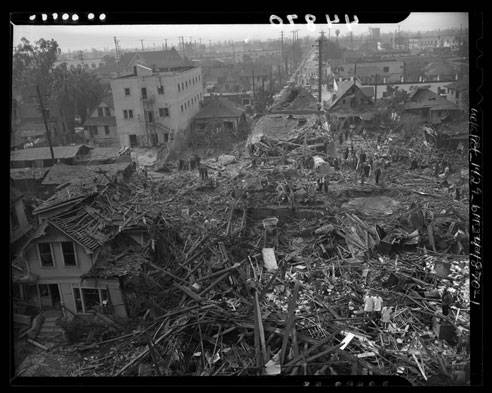
"Compression blew out windows in near-by buildings and shattered glass in some structures more than a mile away, while reverberating roar carried as far as San Fernando Valley and Los Angeles Harbor. It was worst blast in city's history."
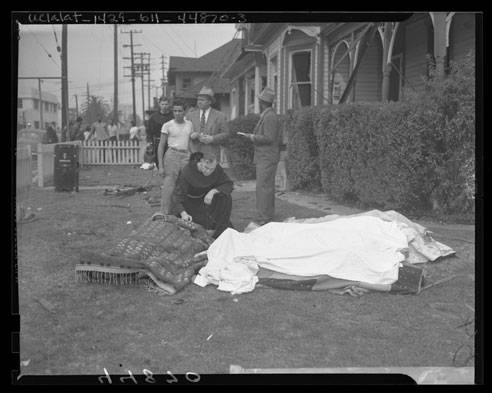
DOWNTOWN LOS ANGELES — At 9:45am on February 20, 1947, Downtown was rocked by a blast the L.A. Times called the worst in the city's history. The explosion leveled the O'Conner Electro-Plating Corporation's building at 926 E. Pico, killing 15 people, injuring 151 and demolishing nearby houses.
The force of the explosion sent debris hurtling through the air and created a sound that could be heard miles away. The Times, which dedicated much of its first few pages to the disaster in the following day's paper, reported that it received calls from readers who heard the explosion as far away as Long Beach and San Fernando. 116 buildings in the area suffered damage.
Norman Scott, a twenty-one year old Navy veteran a block away at the time of the blast, described the scene as worse than any he had seen at war. "[The victims] were screaming and moaning. I saw one lady with all her clothes blown off and another man cut clear in two. One young fellow was crawling out crying that his father was back inside. I think his father was dead."
Among the dead was Alfred Lee Carter, a twelve year old boy. He was riding his bicycle a block away from the plant when he was hit by a 15-foot long section of 4-inch pipe that had been tossed into the sky.
Investigators blamed the devastation on a tank of perchloric acid that the plant's chief chemist, Robert M. Magee, had been tending at the time of the blast. The bodies of Magee and his assistant, Miss Alice Iba, were never found and were believed "blown to bits."
At an inquest held in March, prosecutors alleged that Magee, who claimed to have a PhD from M.I.T., had manufactured his credentials and had in fact never graduated from high school. The jury found that his mixing of acids and oxidizing materials led to the blast.
The plant was manufacturing furniture for an Army contract at the time of the blast. The Times reported that the appearance of two armed soldiers soon after the explosion took place triggered rumors that some secret armed forces work was underway. An Army official told the paper that the department was simply checking to see if any of the furniture was salvageable.





Walmart drew Downtown protests, but why...
Construction begins on $72 million bus...
Construction begins on $72 million bus...
Construction begins on $72 million bus...
Donated collection of maps is like 'Christmas...