blogdowntown
Not currently logged in. [Login or Create an Account]

Stay Connected


Figueroa Corridor project pushes forward with 2014 deadline looming

By Hayley Fox
Published: Wednesday, April 10, 2013, at 02:29PM
via MyFigueroa

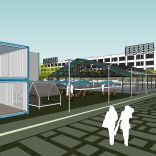
A rendering of what will be the new intersection of 11th and Hope streets in downtown L.A.


Miles of Downtown's Figueroa Street is poised to undergo a transformation that will turn the bustling thoroughfare into a more pedestrian, cyclist and public transit-friendly area. But the funds for this makeover must be used by the end of 2014 — putting extra pressure on supporters to move the project forward quickly.

On Tuesday at a community meeting, Los Angeles Department of Transportation (LADOT) officials and project supporters presented updated plans for the Figueroa Corridor Project (or MyFigueroa) to a packed room.

Although many seemed enthusiastic about the new renderings, some DTLA residents and meeting attendees expressed concern over how these pedestrian-friendly streets would effect car traffic. Figueroa is an already congested commuter passage, and more room for bikes means less room for cars.

But L.A. City officials say that the project's effect on traffic has been considered and documented throughout the Environmental Impact Report process. Because of the Figueroa Corridor's quickly approaching deadline, only minor changes to the plan can be made at this point anyway. Otherwise, the city risks losing funding altogether.

MyFigueroa supporters continue to emphasize how developmentally progressive this new corridor will be anyways. There will be streets lined with flowers and plants, buses with raised platforms and shelters and cyclists will not only have a designated space on the road, but they will be protected from traffic by buffered bike lanes.

This which aims to connect DTLA to South L.A. and turn Figueroa into a "complete street," is likened to populated streets in other big cities throughout the country; such as Valencia Street in San Francisco and 11th Street in New York.

Urban designer Deborah Murphy who's working on the Figueroa project, said the point of the new Figueroa is "to connect people with their jobs, to where they go to play and get entertainment." And supporters say these changes to Figueroa — as well as to the portions of 11th Street and Martin Luther King Jr. Boulevard that are being re-designed — will bring economic benefits as well.

According to the National Complete Streets Coalition: "When a bike lane was added along Valencia Street in San Francisco's Mission district, nearby businesses saw sales increase by 60 percent, which merchants attributed to increased pedestrian and bicycle activity."

Details from Wednesday night's presentation include proposed designs for light features, foliage, signage, crosswalks and bus shelters. Banner signs with color photos and slogans such as "Run Fig" and "Ride Fig" will hang from street poles and bus shelters will have room for advertisements and public art.

The proposed street lights include a mix of functional pieces and ones with a decidedly historic aesthetic. Street medians will be planted with Jacaranda (trees or shrubs that sprout purple flowers), and two different types of lilies will line 11th Street.

According to city officials, they'll be wrapping up design plans for the corridor by June 30. This will put them on track to complete construction by the end of 2014.


SHARE:

||


Conversation

User_32

John G on April 10, 2013, at 06:48PM – #1

This development will have limited influence in the surrounding area. Seems like the major push here is more "aesthetics" than "functionality" of the streets between primary and secondary uses. What brings people onto the streets is the need for things in everyday life, such as walkability to amenities, proximity to work, etc. - Not just mere wider streets, bus/bike lanes, and pretty flowers. To see real viability, this corridor needs to focus on more denser mixed-use projects and attracting more employers to promote job centers within the area.


User_32

Dion on April 11, 2013, at 12:03AM – #2

right, cause thats not happening in downtown LA...


User_32

Pershing was a square on April 11, 2013, at 09:09AM – #3

@John - it's not like they have to wait until those mixed-use buildings are built before doing anything with the street. It's not a linear process. Also, improving the street will help bring in new development as well and show commitment by the city to the area. And these aren't all aesthetic issues, there are functional improvements as well.


User_32

John G on April 11, 2013, at 01:12PM – #4

@ Dion, right, cause all of Figueroa St. happens to be all in downtown LA.

@ Pershing was a square - True, your point makes much more sense. But I have been to very dense places (such as Amsterdam) and its more than just aesthetics and the lay-out of the public streets that makes a place more vibrant. Mixed-uses, dense employment areas, and excellent public transit do more to promote street life than say, bike lanes. And from what I've observed, Amsterdam is loaded with bike riders going all over the place. This makes sense because all amenities and primary/secondary uses (like home and a museum) are all within biking/walking range. What Los Angeles is trying to do is putting lipstick on a pig. Until we get undue the effects of segregated land-use zoning by placing more mixed-use developments in place, the planned corridor for this place will never capture its full utility. I see your point, but our priorities should be money spent first on the buildings. Why? Well first, it addresses our housing and population needs. Without the "structural" density in place, the effect is congested traffic on our streets as more people live here. Again, it's not the streets fault, its the way we build our building infrastructure and their spatial arrangements (lack of mixed-use, low-density advocates, the continuance of segregated land-zoning, etc.). Second, building up the capacity for growth (structural density) SUBSTANTIATES the need for people to use the streets (bike/bus lanes, sidewalks, etc.) IF we build right through more mixed-use and investment in employment centers. By the way, employers (whether big or small) won't plop down their stores unless the labor pool and skill sets of employees are readily available. They also won't come unless the market is there, which higher-density provides. When I was in the Philippines, I saw two burger joints on the SAME street near each other. They are vibrant because one catered to the thru-traffic of pedestrians on their way to/from the city light rail metro station. The other captured the traffic of consumers going into/out of the shopping malls. Density makes a world of difference. This Fig. Corridor, in my honest opinion, is still largely anemic but slowly growing (with the exception of LA Live area). Again, our priorities should be on structural development, the streets can be adjusted later when the real need substantiates their existence.


User_32

South Parker on April 12, 2013, at 09:41AM – #5

The difference with Amsterdam and LA is that our city was built around the automobile. Amsterdam is smaller, more contained and bikes are more convenient than cars. LA is spread out. Even with new public transit, ie. subway to the sea, most people will still use their cars. It's a car culture. Most people in NYC don't own a car, most people in LA don't use public transit.
I can almost understand the work on Figueroa, but 11th St. is two lanes that runs directly to Staples and LA Live. It's irresponsible to reduce this to ONE lane. It's the primary artery into the the largest entertainment complex in LA. There's already a backup every time there's a game or event. If Farmer's Field gets built (with 70,000 seats), I don't see how one lane into the area will work. We're a world class city. Start acting like one.


User_32

John G on April 12, 2013, at 03:43PM – #6

@ South Parker,

Some good points, but when you "Amsterdam is smaller, more contained and bikes are more convenient than cars.", in my opinion, that really undervalues Amsterdam's urban construct and missing the point. Have you been there yourself? It is more than being "smaller" and "contained". The physical framework of the communitiy is very conducive to public discourse. Figueroa St. is not. And this proposed project is more like an artificial design that is somewhat ahead of its time, considering there is still a lack of high-density mixed-used development along its course, especially the southern areas.

I am intrigued how the selling points of this project (bike lanes, raised platforms, trees/flowers, etc. etc.) seem so plausible, yet unreflective of the other necessary facets required to promote a walkable vibrant atmosphere (higher-density, mixed-use, job growth, etc.). This project cannot draw the other necessary elements of growth and vibrancy without understanding the synergy required from other factors involved. I understand Perhing's point that this is not a linear process. But my concern is that public officials and project supporters are not really seeing the bigger urban picture. The SF Mission District example of more business after bike lanes were implemented might seem rosy, but what is the density popuation and why were there more bikers in that area? There are reasons why some people ride bikes in certain areas more than others. And much of it has to do with the number of available amenities within biking distance from one's work and/or home.

If MyFigueroa supporters really want to see progressive growth along this corridor, then perhaps they should add the word "community" or "neighborhood" to MyFigueroa. Focusing only on the street (Figuroa) really drives home the fact that we are still stuck in an suburban streetscape mindset...


Add Your Voice


In an effort to prevent spam, blogdowntown commenting requires that Javascript be enabled. Please check your browser settings and try again.


blogdowntown Photo Pool

Photos of Downtown contributed by readers like you.

Downtown Blogs


Downtown Sites


Elsewhere